Start with the cap, not the patch
A patch is only as good as the surface under it. Structured caps with a firm front panel — the Richardson 112 is the event standard — take heat and pressure evenly, which is why they dominate hat bars. Unstructured dad caps work but need more careful seating. Bucket hats bring the fashion energy and suit smaller patches on the soft crown. Beanies press beautifully on the fold-up cuff. Mixing two silhouettes gives guests a real choice without doubling your blank order.
The curved-surface problem, solved with hardware
You cannot press a curved crown on a flat platen and expect clean edges. Our stations run cap presses with curved platens matched to the panel, so pressure lands evenly from bill to crown seam. That hardware is the difference between a patch that survives two years of wear and one that lifts at the corner in a month. It also fixes placement: front-and-center on the panel, level with the bill, every time.
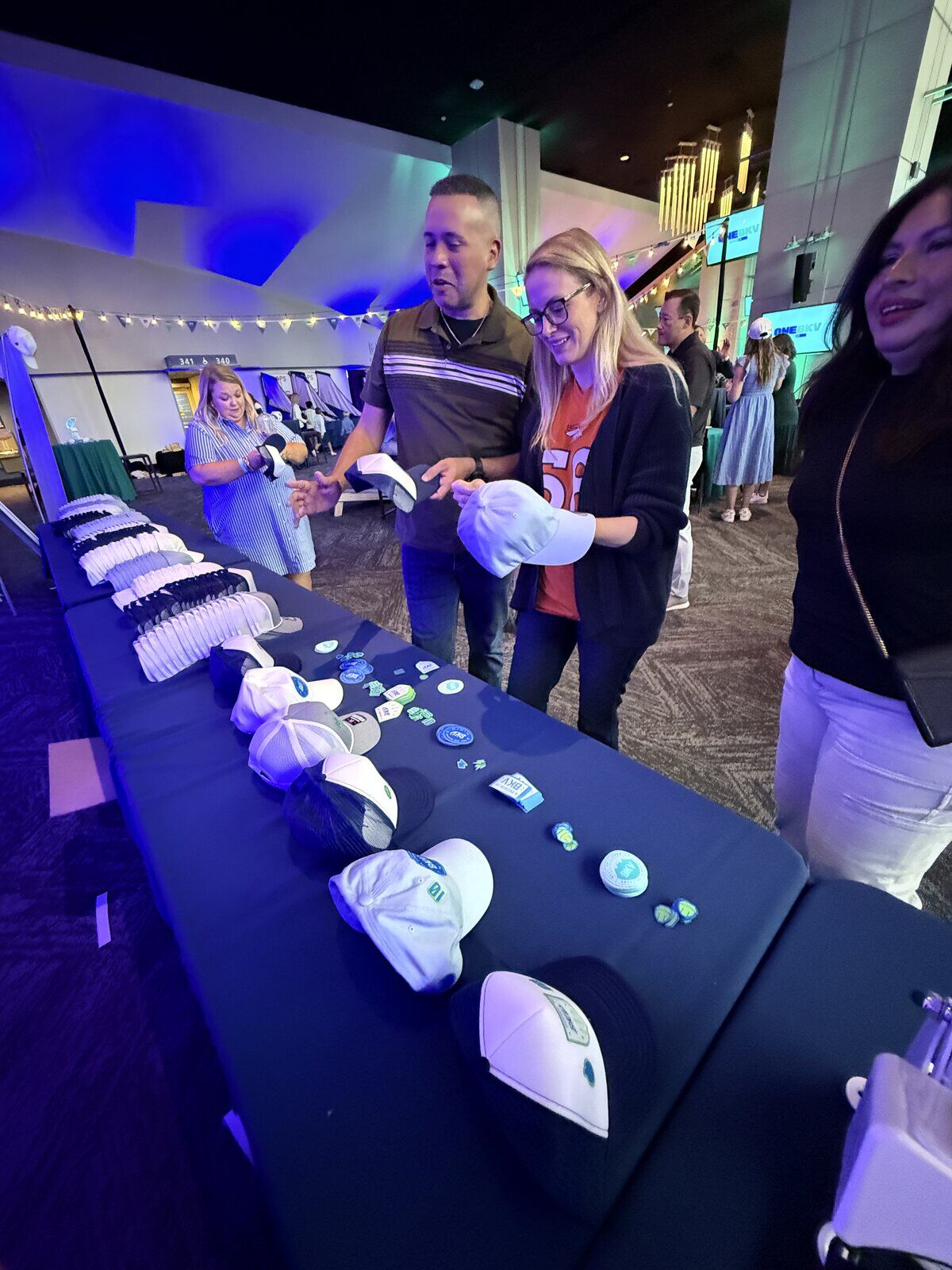
Lay the wall out for hat logic
Hat pickers make one decision, maybe two — a front patch and occasionally a side accent. So the wall should read fast: hero designs at eye level and sized 2.5 to 3.5 inches (the front-panel sweet spot), smaller accent patches grouped below, and a finished sample hat at each end of the wall so guests see the destination before they start the journey. Sample hats cut decision time roughly in half, and decision time is what actually rules your line speed.
Pace the line like a coffee bar
A cap placement takes about a minute of press time, but a guest interaction takes three: greet, choose, place, press, hand off. One press with a sharp crew clears 30 to 40 hats an hour; two presses with a dedicated picker out front clear 60 to 80. For a 200-guest event over three live hours, two presses is the honest spec — one press only works if arrivals stagger.
The order math for hats
Hat bars run leaner than tote walls: one to two patches per guest. Order caps at 1.05x expected participants (a small buffer for the inevitable do-over), and patches at roughly 1.8x — weighted double on your two hero designs. Full collection strategy lives in the patch wall guide, and the cost anchors are on the pricing page.
What the venue needs to provide (almost nothing)
The full hat bar — wall, staging table, two cap presses — fits a ten-by-ten footprint. Power is one 120V 20A circuit, and it needs to be ours alone: a cap press sharing a breaker with the DJ rig or an espresso cart is the most common venue failure we see, and it announces itself mid-event. Outdoors, plan shade; a press deck holds temperature fine in the sun, but hot patches need a still minute to cure, and a 95-degree table stretches that minute badly. Load-in runs 60 to 90 minutes before doors, strike runs 45. Ask your venue for those two windows plus a freight-friendly path to the room, and the logistics conversation is over.
The timeline, working backward from event day
Custom patches are the long pole: two to three weeks of production plus a proof checkpoint you should not rush. So the honest calendar reads like this. Four weeks out: artwork locked and in our hands. Three weeks out: proofs approved, run stitching. One week out: patches land, we photograph the collection and confirm the wall layout. Event week is the easy part — crew, presses, and caps book on days of notice, not weeks. A trade show with a fixed booth date gets zero schedule mercy, so if that is your format, start the artwork conversation first and everything else falls in behind it.
The three failure modes we pre-build against
Every hat bar that goes sideways does it one of three ways. The line stalls at the wall — fixed by sample hats and a picker working the queue, as covered above. The hero patch runs out at hour two — fixed by the 1.8x weighted order; running out of the design everyone came for is the one mistake guests remember. Placement requests go rogue — someone wants a patch on the side panel, over a seam, on the bill. The crew carries a short house-rules card and a practiced, friendly no: seams and bills return lifted edges, and we would rather disappoint a guest for ten seconds than hand them a patch that fails in a month. The cost side of all this lives on the cost answer.
Or hand the whole spec to us: send your date and a producer will size the hat order, the patch run, and the press count in one pass.
Want a hat bar without the homework?
Send guest count and city — we return the full hat-and-patch spec priced.